

The Evolving Tactics in Active Shooter Article
I remember as a young man seeing a news story about a U.S. Post Office employee going into his work site and shooting fourteen of his fellow workers and then taking his own life. This incident occurred in Edmond, Oklahoma, on August 20, 1986. Just five years later, a former Post Office employee did the same thing, killing four and wounding four. This incident occurred in Royal Oak, Michigan, on November 14, 1991. Being from Michigan, this struck close to home.
Columbine High School
There have been many active shooter-mass casualty attacks in the United States since the 1980s. Those that have been selected for inclusion in this article are relevant to the article’s topic. On April 20, 1999, the worst mass shooting to date in the United States in a school took place in Jefferson County, Colorado, at Columbine High School. Two students entered the school that morning at 11:19 AM armed with pipe bombs, handguns, shotguns, and semiautomatic rifles. They killed 14 teachers and students before turning their guns on themselves. Official police reports state that the shooting ended at approximately noon; however, law enforcement did not enter the school for several hours as they believed there was still an active threat. The Jefferson County, Colorado community was rocked by this event and left trying to answer the question, Why?
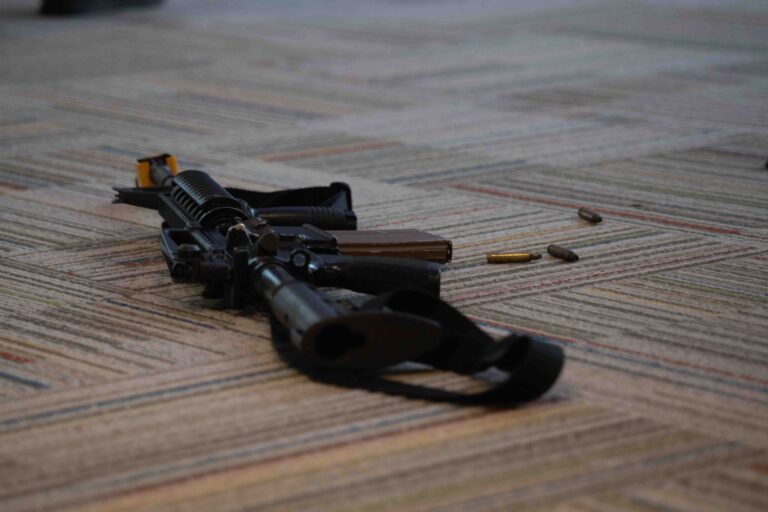
The official report issued by the Jefferson County Sheriff’s Office concluded with the following coda: “While our community struggles with that question and grieves those who were lost, we remain united in one hope—that our nation shall never see anything resembling the tragedy at Columbine High School again” (Jefferson County Sheriff’s Office, 1999). Since 1999, our nation has witnessed many incidents like Columbine, and maybe that hope has been lost.
At the time of the Columbine High School attack, law enforcement’s response to these events was to secure a perimeter around the building and wait for the SWAT Units to arrive. SWAT, or Special Weapons and Tactics Units, are highly trained and specially equipped sub-units within police agencies and are used in high-risk incidents. After the Columbine attack, law enforcement’s response changed from containing and waiting for the SWAT Unit to a doctrine of the first three to four officers on scene will immediately go in and neutralize the threat.
As law enforcement made changes to how they respond, schools and other soft targets have enhanced their physical security measures. One of the first security improvements was the use of access control systems and security cameras. Additionally, many schools now have police or security officers on-site, a practice that has become the norm. Schools across the nation have hardened their campuses and made school security a priority.
Active Shooter Case Studies
In December 2012, the Sandy Hook Elementary school in Newtown, Connecticut, fell victim to an active shooter. The school’s security protocols had recently been upgraded, requiring visitors to be individually admitted after a visual and identification review by a video monitor. Doors to the school were locked each morning at 9:30 a.m. after morning arrivals. The Sandy Hook school attacker had shot and killed his mother in their home before driving her vehicle to the school. Upon arrival, the shooter shot out the glass next to the school’s locked front door. Before taking his own life, the shooter killed a total of twenty-eight, including himself. The victims included twenty children and six adults.
In March 2023, a 28-year-old former student, armed with two semiautomatic rifles and a shotgun, attacked the Presbyterian Covenant School in Nashville, Tennessee. The attacker was seen on security cameras, shooting out the glass in the locked door and side windows, and gaining access. The attacker went on to kill three nine-year-old students and three adult staff members.
Then on August 27, 2025, the Annunciation Catholic Church in Minneapolis, Minnesota, was attacked during a school-wide Mass that was being held in the church’s sanctuary. The attacker, whose mother was a former employee at this school, fired several rounds from an assault rifle through the windows into the building, killing two students before killing himself. The attacker had reportedly barricaded two exit doors with lumber to keep victims from escaping.
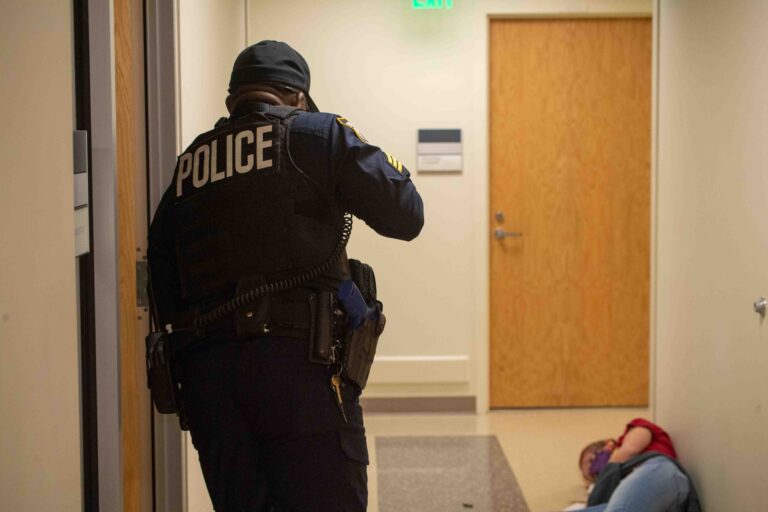
Evolving Tactics
During the past twenty-five years, we have witnessed an epidemic of mass shootings and mass casualty attacks in the United States. As schools, businesses, and other soft targets attempt to improve security, attackers have also evolved. One of the first changes to physical security was the addition of access control systems. These systems require some form of authorized access, such as a key, a key fob, or an intercom with a door release button that someone inside the building can push to allow access. These access control systems limit the ability of would-be attackers to enter a building.
Although access control systems made it more difficult for attackers to enter targeted buildings, attackers evolved their tactics. Active Shooter-Mass Casualty perpetrators started shooting out the glass of either the doors or the nearby windows to bypass the access control systems. To address this issue, innovative security industries have developed coatings or films that can be placed on existing glass panels. These films or coatings can delay or prevent an attacker from breaking out the glass even after shooting it several times. They have even developed a film that not only prevents or delays glass from breaking but also stops handgun and shotgun rounds from penetrating inward, while allowing police or security staff to shoot outward through the glass.
Since the tragedy at Columbine High School in 1999, we have seen an attempt to harden physical security measures at soft targets like schools and religious facilities. However, we have also seen attackers adopting their tactics to counter these measures. The most recent event occurred in September 2025. The Church of Jesus Christ of Latter-day Saints in Grand Blanc Township, Michigan, was the scene of an Active Shooter-Mass Casualty Attack. This attacker used tactics that were similar to those of previous mass casualty perpetrators and some new tactics. The Grand Blanc Township attacker barricaded the exit doors from outside to prevent escape, much like the tactics used by the Minneapolis shooter. What was a new tactic in this case was that the attacker then used his pickup truck to drive through the locked front door of the church, rendering access control and protective glass ineffective.
Once the building was breached, the attacker began shooting churchgoers, killing two, and forcing others to retreat deeper into the building. The attacker then used incendiary devices and started a devastating fire, trapping church members inside. Law enforcement responded within minutes and neutralized the suspect; however, many were trapped inside by the fire. When the fire was extinguished, two additional bodies were found, raising the death toll to four, not including the attacker, who was killed by law enforcement.
Response Training
Following the Columbine High School attack, students and teachers were instructed to turn off the lights, lock the door if possible, and hide together out of sight of any windows. This was later changed to having everyone separate and hide. The reason behind this change was to limit the shooter’s target availability as much as possible, hoping to reduce fatalities. History has shown us that these attackers cannot be reasoned with or pleaded with. Begging for mercy will not ensure survival. As a victim, you have two choices: go out on your knees begging or go out on your feet fighting.
Several programs have been developed and are being taught to church and school staff, school children, and healthcare communities. These programs vary in content, but they all provide basic skills to survive these types of attacks. The foundational premise of these programs revolves around “Run-Hide-Fight,” or “Delay, Deny, Defend.” The Run-Hide-Fight doctrine is self-explanatory. If possible, victims should run and escape. If escape is not possible, hiding is the next option. And finally, if confronted by the attacker, fight.
The tactics that are instructed in the Delay, Deny, and Defend doctrine may provide victims with a better chance of survival. Victims of a mass casualty attacker who can slow the attacker’s ability to gain access to rooms by barricading doors and spreading out will buy time for law enforcement’s response and the neutralization of the attacker. Surviving a mass casualty attack can be increased if the shooter’s access to victims is completely denied. Successfully barricading or securing a door and preventing the shooter from entering an area will ensure the survival of those in that area. Much like the “fight” aspect, the “defend” piece of the delay, deny, defend doctrine means fighting back. Victims should throw things at the attacker to distract them, creating a window to rush and overtake them. There is power in numbers here.
Conclusion
The threat of Active Shooter-Mass Casualty Attackers is not going to end anytime soon. Motivated by ideology, vengeance, and, in many cases, mental illness, attacks on soft targets will continue. Society will continue to struggle to identify potential attackers before they strike, while also working to enhance physical security measures and training. Law enforcement and security providers need to understand that attackers are evolving. Attackers will develop tactics to defeat new physical security measures and refine their methods of committing these violent crimes. We must stay at least one step ahead of them.
Active Shooter-Mass Casualty Attack Response Training
Teachout Security Solutions offers Active Shooter-Mass Casualty Attack Response Training for any organization. Training is taught from experience, not theory, by a twenty-four-year military and law enforcement veteran. Contact us at Teachout Security Solutions for more information. 1-800-747-0755 or www.teachoutsecurity.com
Author: Michael Morgan, Ph.D. CPP. PCI. PSP.
Teachout Security Solutions Corporate Manager